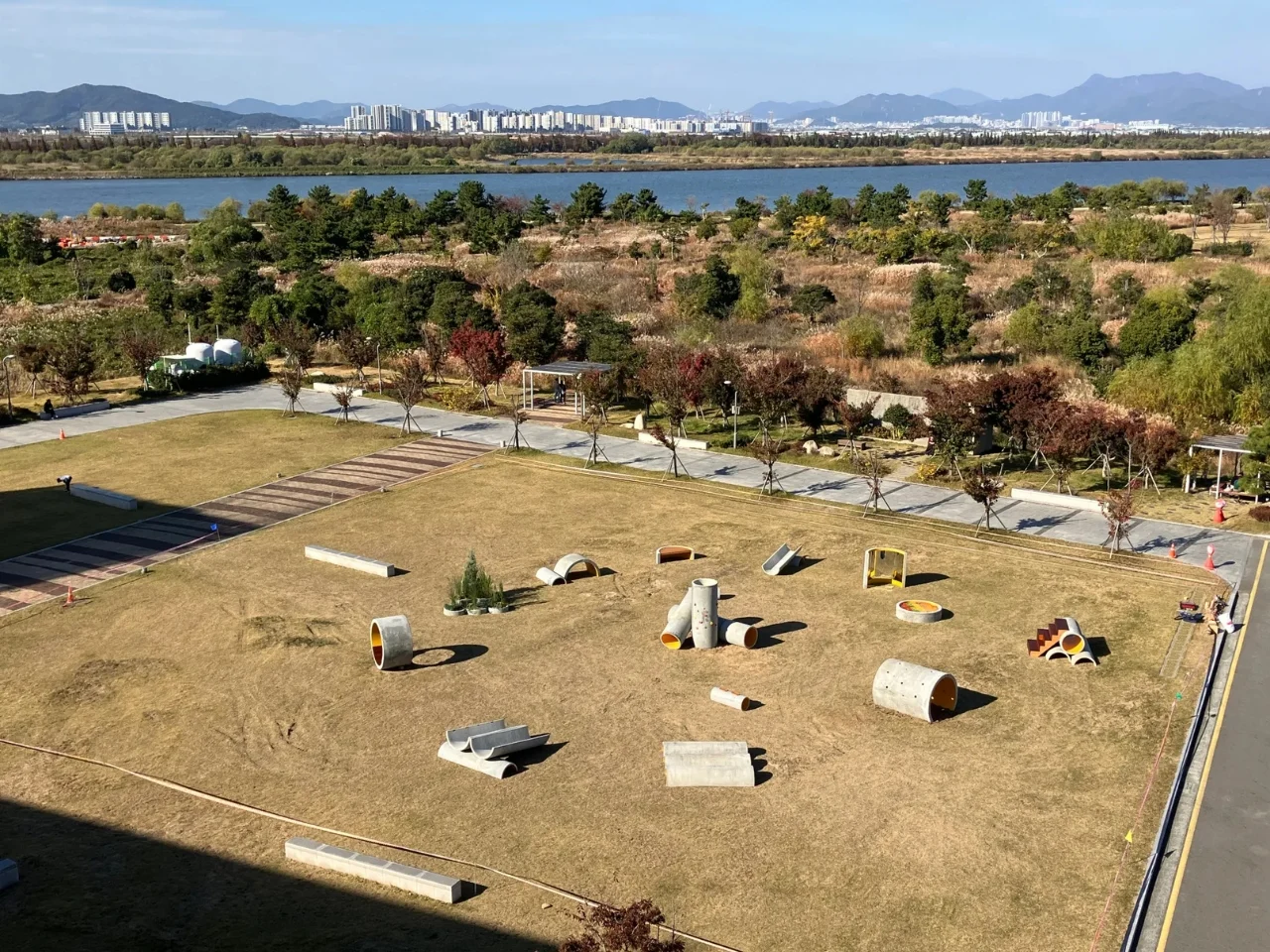
Concrete Utopia: Construction Waste into Pavilion
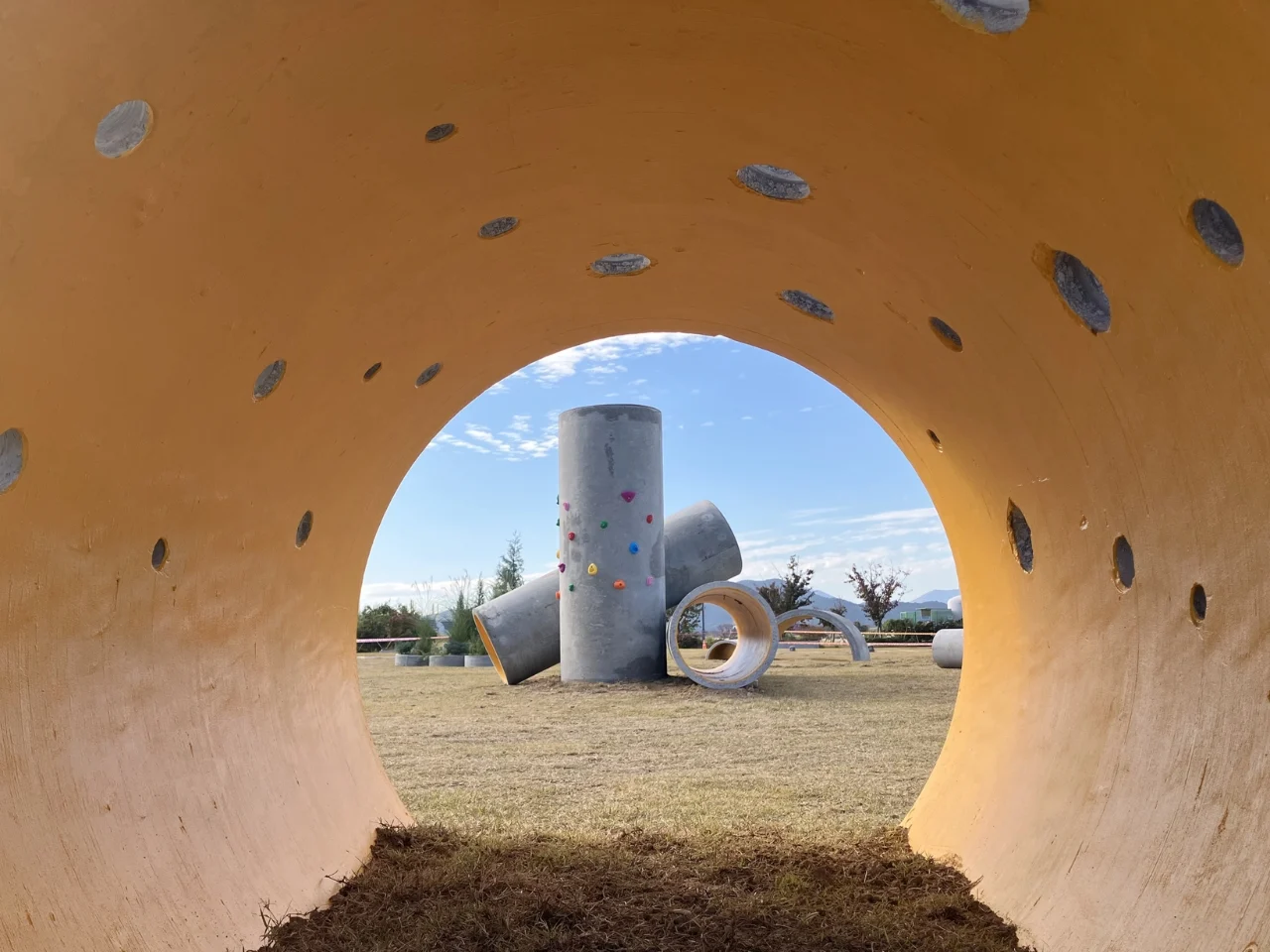
At the Museum of Contemporary Art Busan, discarded concrete construction pipes were transformed into a public pavilion – reframing construction waste as sustainable architecture and public space.
Concrete is the second most consumed material on earth after water. It is also one of the most carbon-intensive, and one of the most discarded. Designer Hyunje Joo‘s Concrete Utopia, installed at the Museum of Contemporary Art Busan in South Korea, takes that discomfort seriously and turns it into something you can climb through.
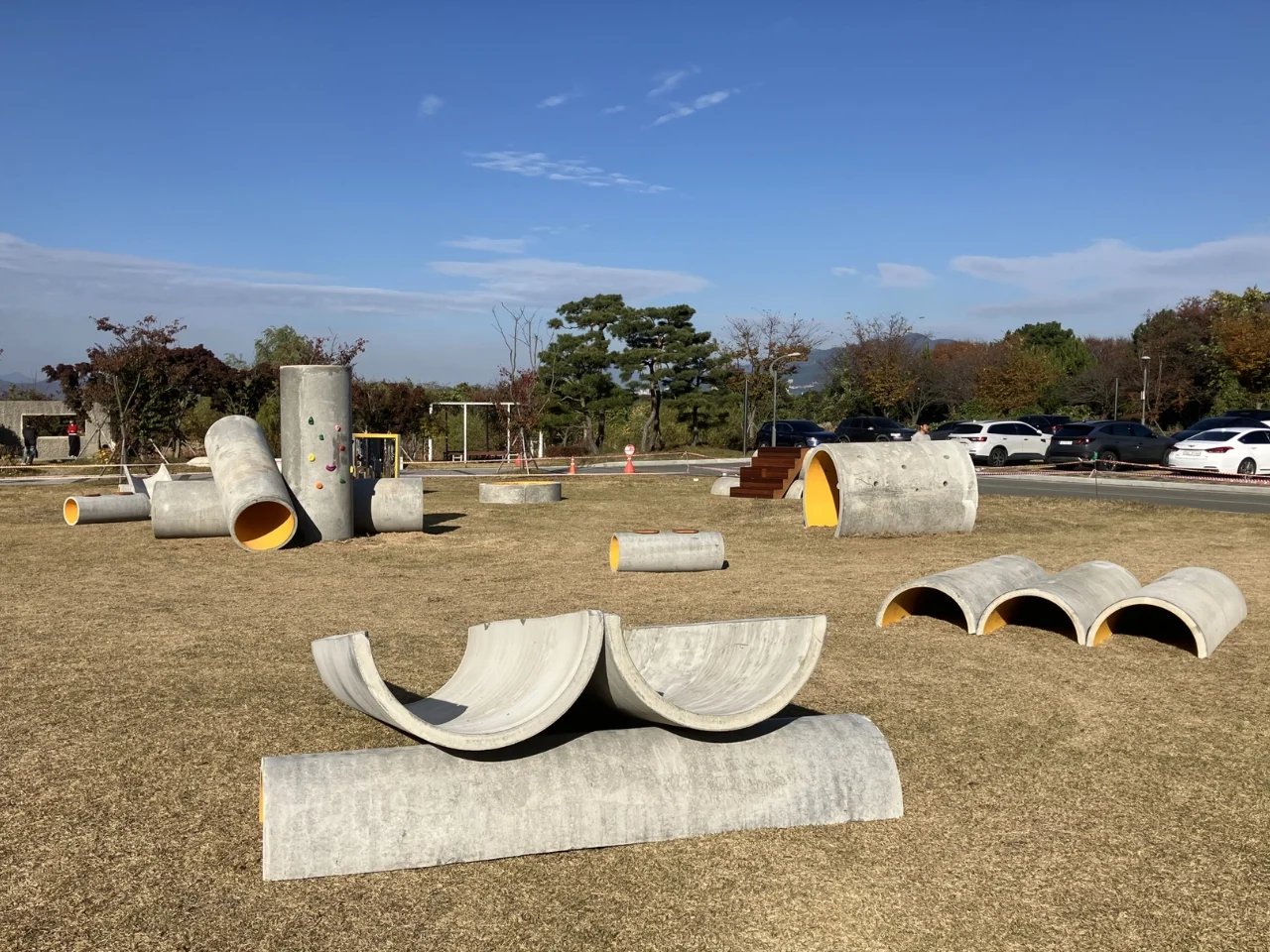
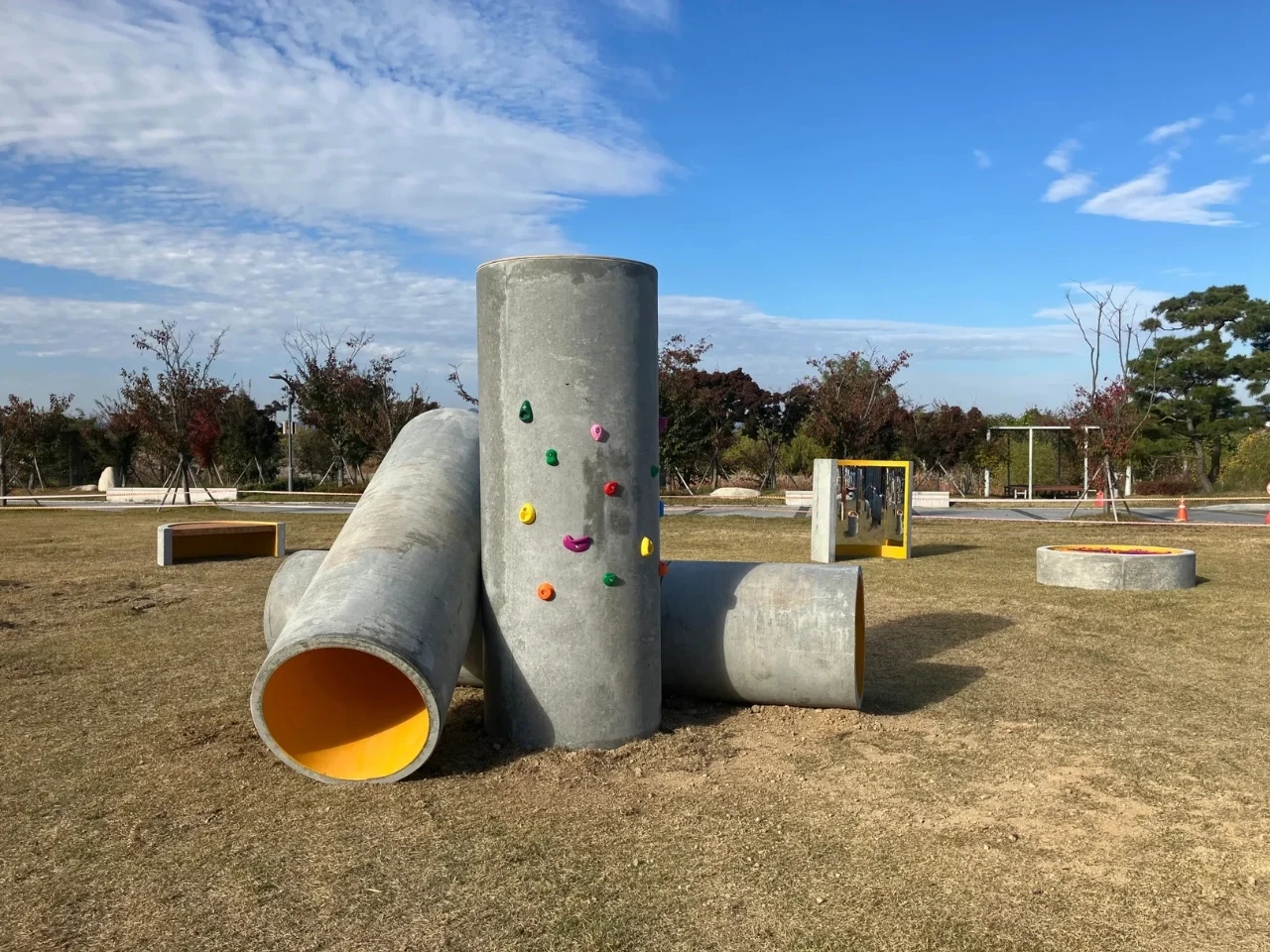
The installation reclaims concrete drainage pipes from urban construction sites, the kind that are routinely abandoned at the end of a project, and reassembles them into an open public pavilion. Pipes of varying diameters are arranged into a flexible configuration that accommodates climbing, sitting, gathering, and moving through. The result is less playground than small city: a micro-scale urban environment with no fixed hierarchy and no prescribed route.
What strikes us about this project is how little has been added. No new materials, no manufactured components, no imported finishes. Just discarded pipes, repositioned and repurposed until their raw weight and texture read not as infrastructure but as architecture, not as waste but as space.
This is adaptive reuse at its most direct, and it asks a question that feels increasingly urgent: what if extending the lifecycle of construction materials was not just an environmental strategy, but a design methodology in its own right? In the context of a global building industry grappling with embodied carbon and material waste, Concrete Utopia points toward something worth paying attention to.
Credits
Photography and design by Hyunje Joo