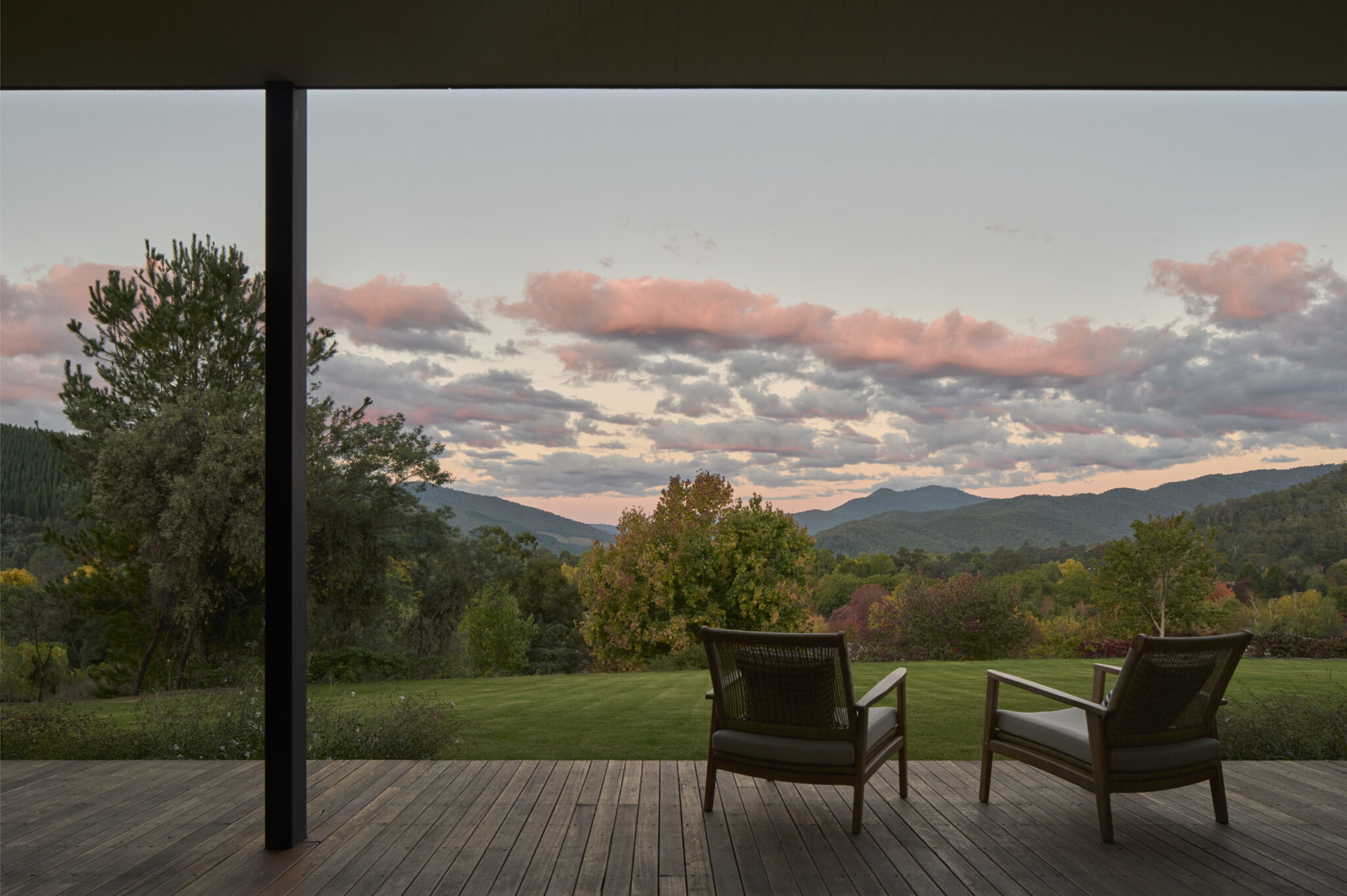
Designing Around A View in Bright, Victoria – In Conversation with Architect David Fantini
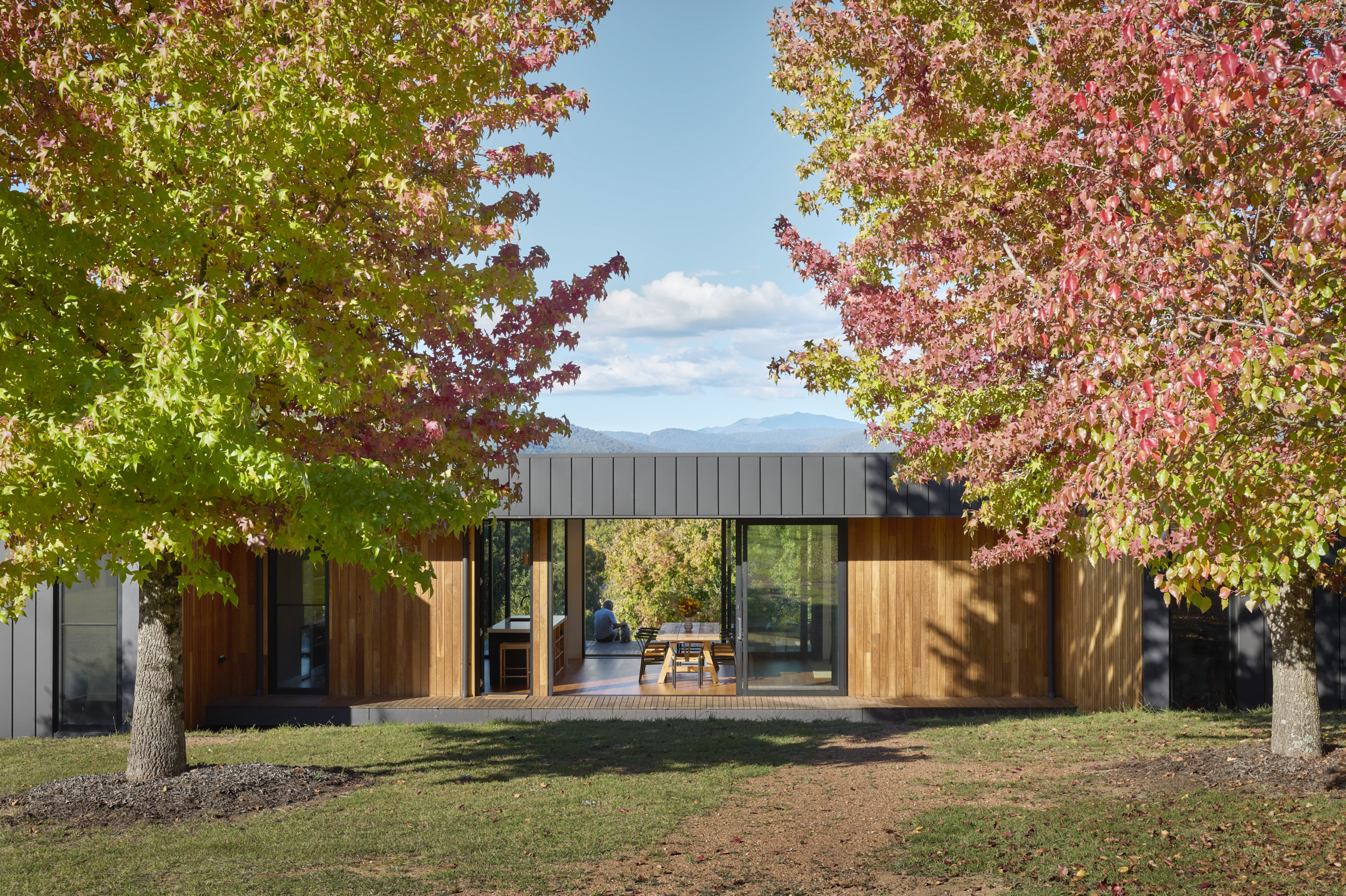
When Modscape + Modbotics was approached to design and build a bespoke home in Bright, Victoria, the client’s brief was clear: create a family getaway, that could transition into a forever home, oriented towards the township and views beyond.
Senior Architect David Fantini led the project from the first sketch. We sat down with him to talk about intent, constraints, and what it means to bring an idea and brief to life through the design process.
The clients came to you with a clear vision. How do you work with a brief like that?
The clients came to us very well-prepared with a sketch plan, which outlined their clear vision on what spaces they wanted, and how they were arranged, with particular awareness of how to address the view.
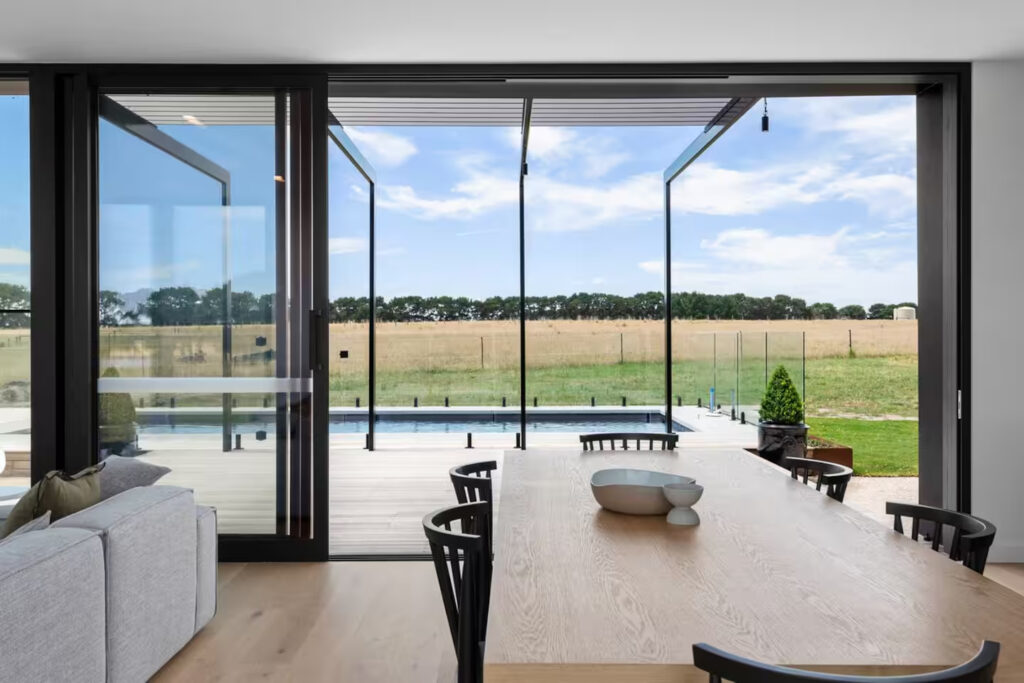
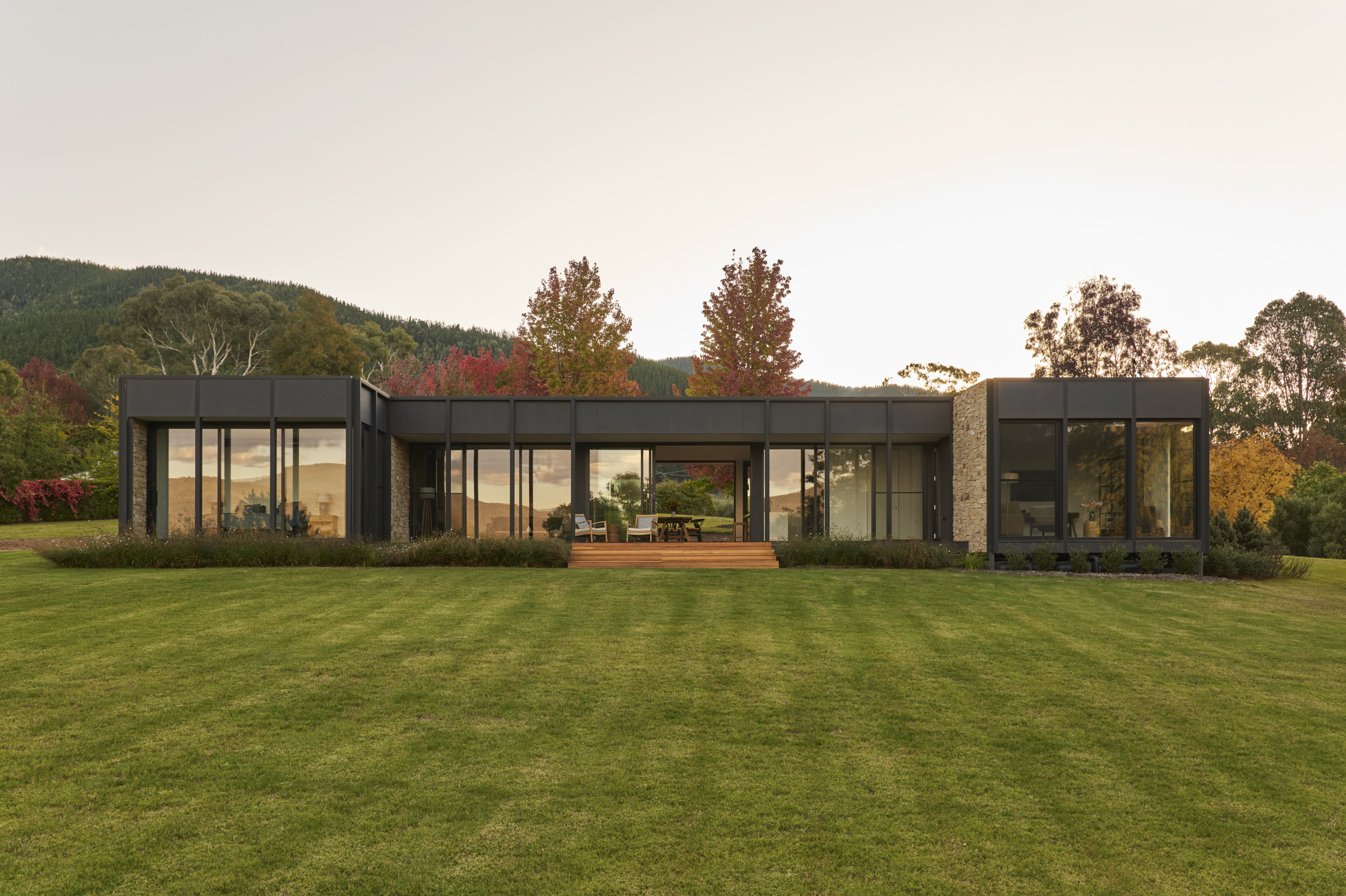
Our first site visit confirmed this approach was the correct path. Sited partially up the hill, panoramic views open up down into the valley, with the surrounding alpine ranges forming a picturesque backdrop.
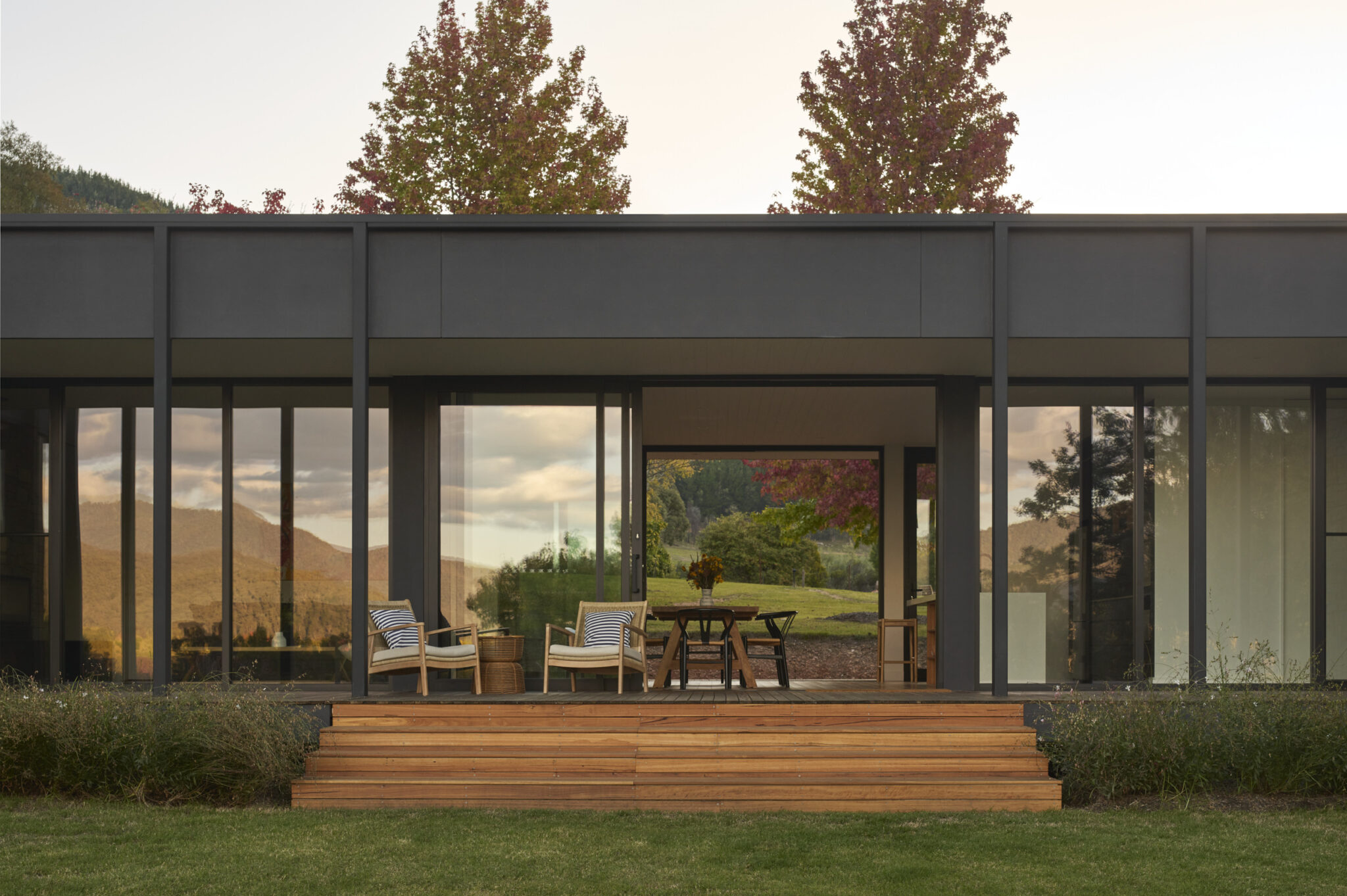
A H-shaped plan allowed for a logical arrangement of spaces, and the potential for each space to receive their own unique perspective of the views.
The site gave you a few constraints – the fall-off at the rear, the orientation. Did those feel like restrictions?
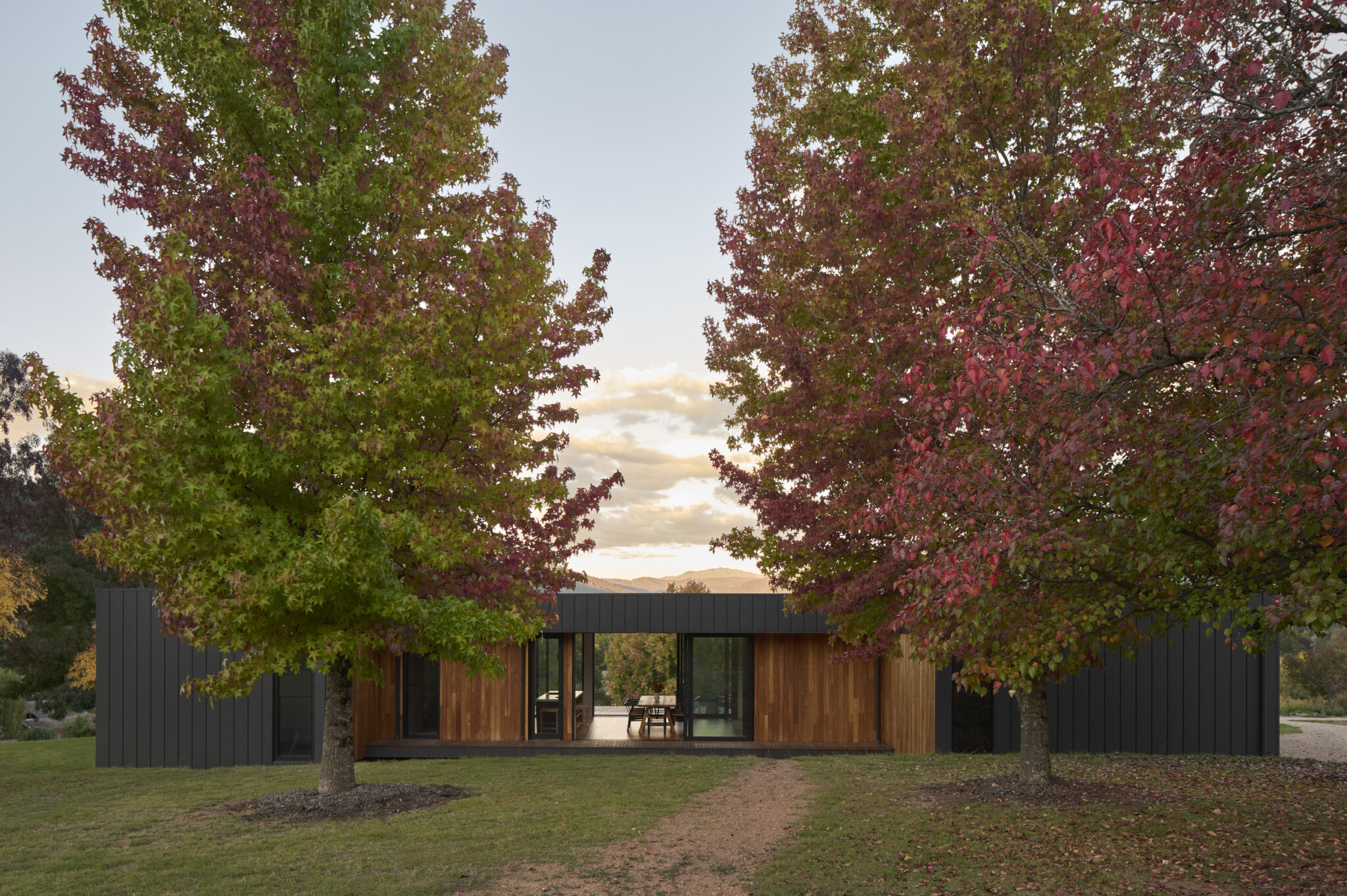
There were very few options for locating the house on the site, however the location we settled on provided the opportunity for a processional driveway approach up to the house, which perfectly framed the home in its landscape.
“The clients came to us very well-prepared with a sketch plan, which outlined their clear vision on what spaces they wanted, and how they were arranged, with particular awareness of how to address the view.”
David Fantini
Senior Architect
The living spaces face east and west. How much of that was the site and how much was the design?
The common notion is that orientating living spaces towards the north, will typically form the ideal approach. This has merit – we are able to easily, and cost-effectively control the sunlight, through the seasons.
Notwithstanding this, each site has its own unique qualities which also need to be considered – orientation and approach to the site, views, and surrounding landscape.
Orientating the living spaces in this design to the east and west made a lot of sense. Primarily, it addressed the views. While an east or west orientation does typically demand added consideration to controlling morning or afternoon sunlight, in this instance, the surrounding hills provided shelter from the sun in summer, and an amazing engagement with the colourful leaves in spring and autumn.
The entry is deliberately understated. What’s the thinking behind that?
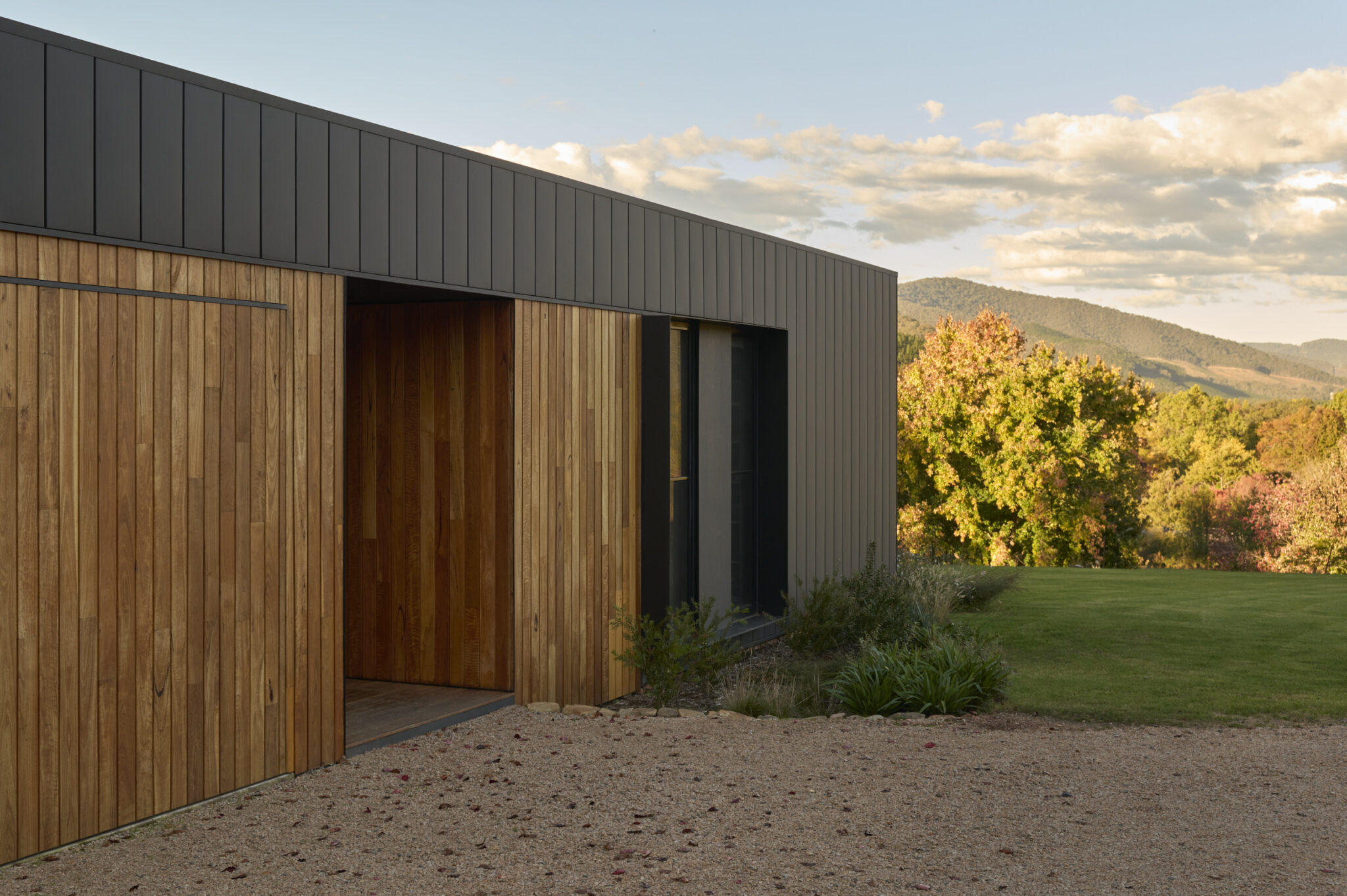
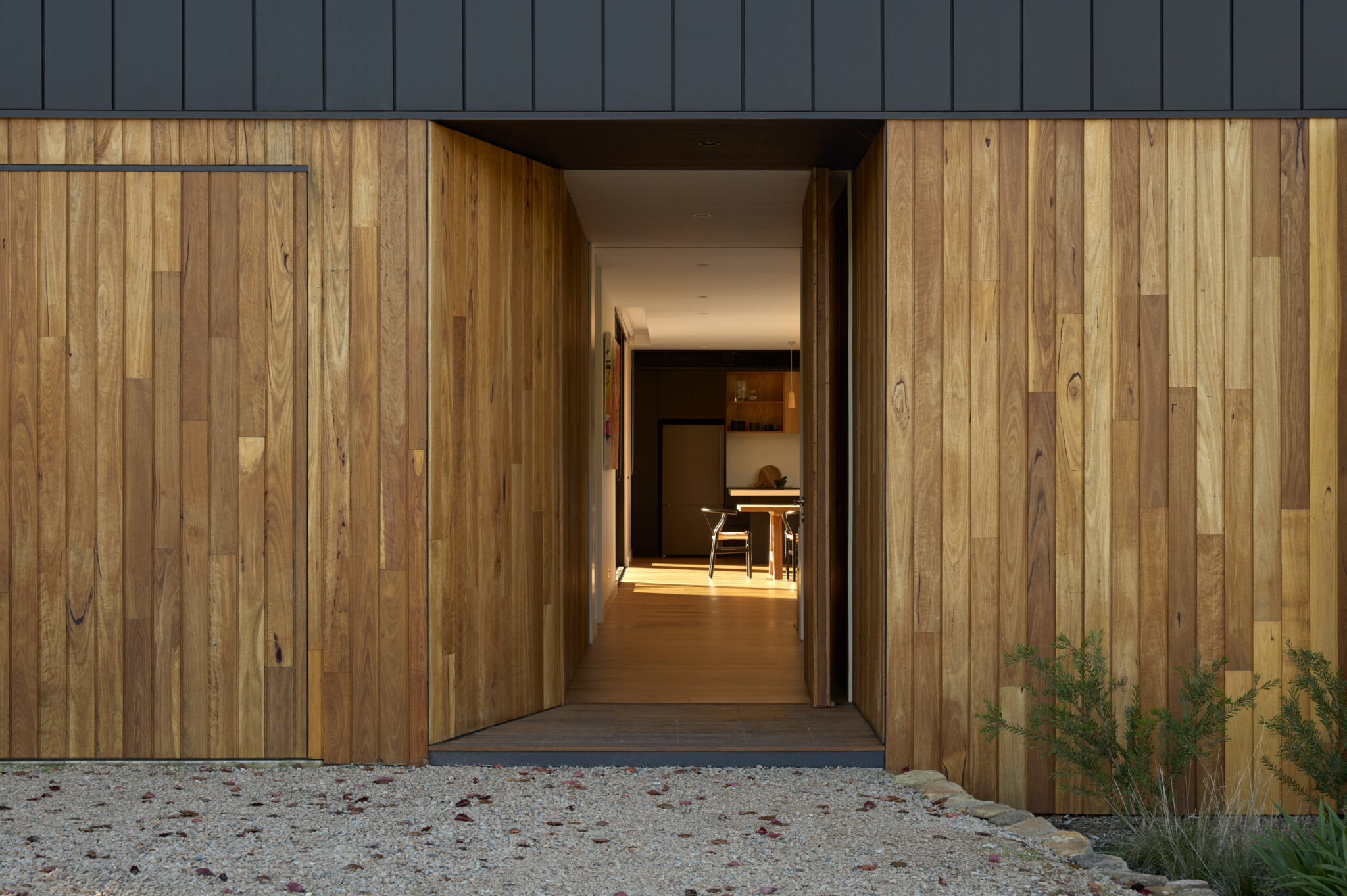
The entry was conceived from a more pragmatic approach, located conveniently next to the arrival area. A well-detailed, timber clad space, its primary purpose is to provide shelter, before funnelling you inside towards the living area, where the views visibly expand before you.
Stone, blackbutt, Colorbond Monument – how did you arrive at that palette?
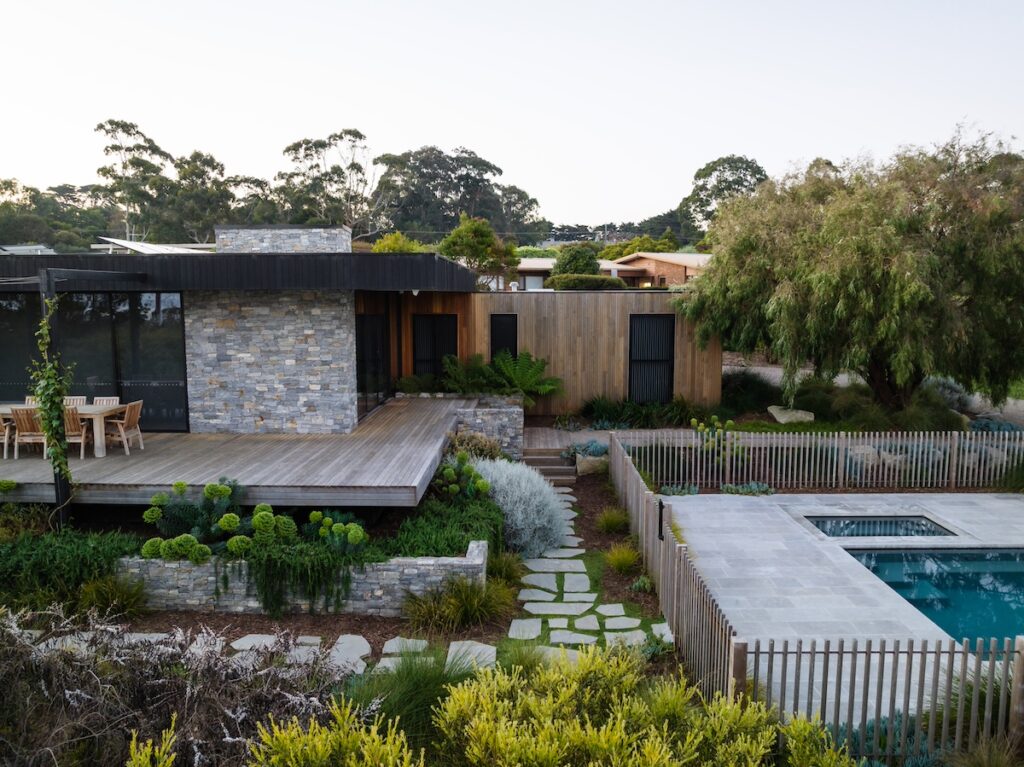
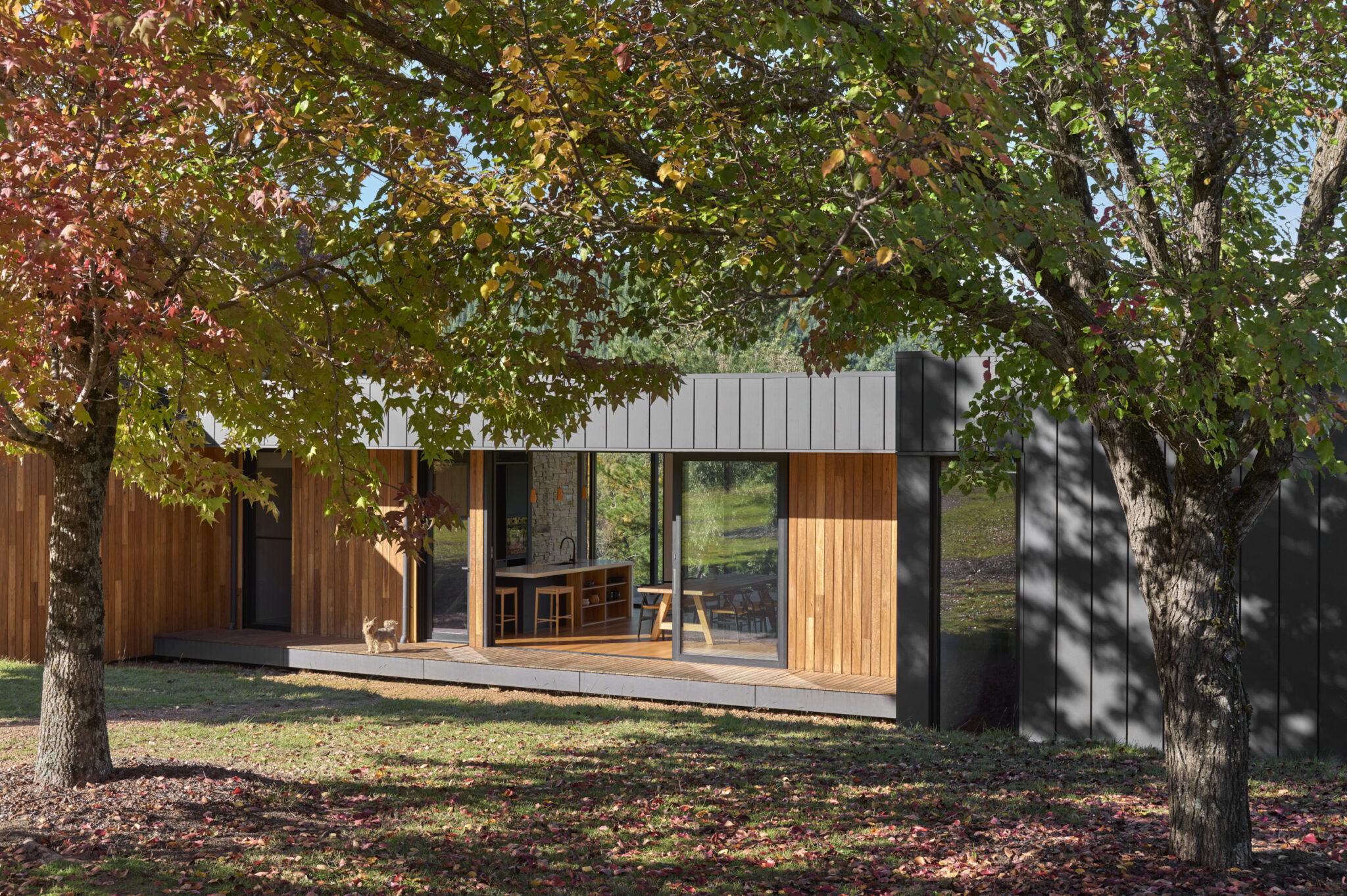
We were keen to provide a well-considered material palette, which referenced the greater context, and rich in texture and depth. The predominant Colorbond cladding has a darker hue, to help it site comfortably in the landscape, and provide a contrasting background to the changing tree leaves. The cladding was specified in a Matte finish, selected for how it softly receives shadows and dappled light.
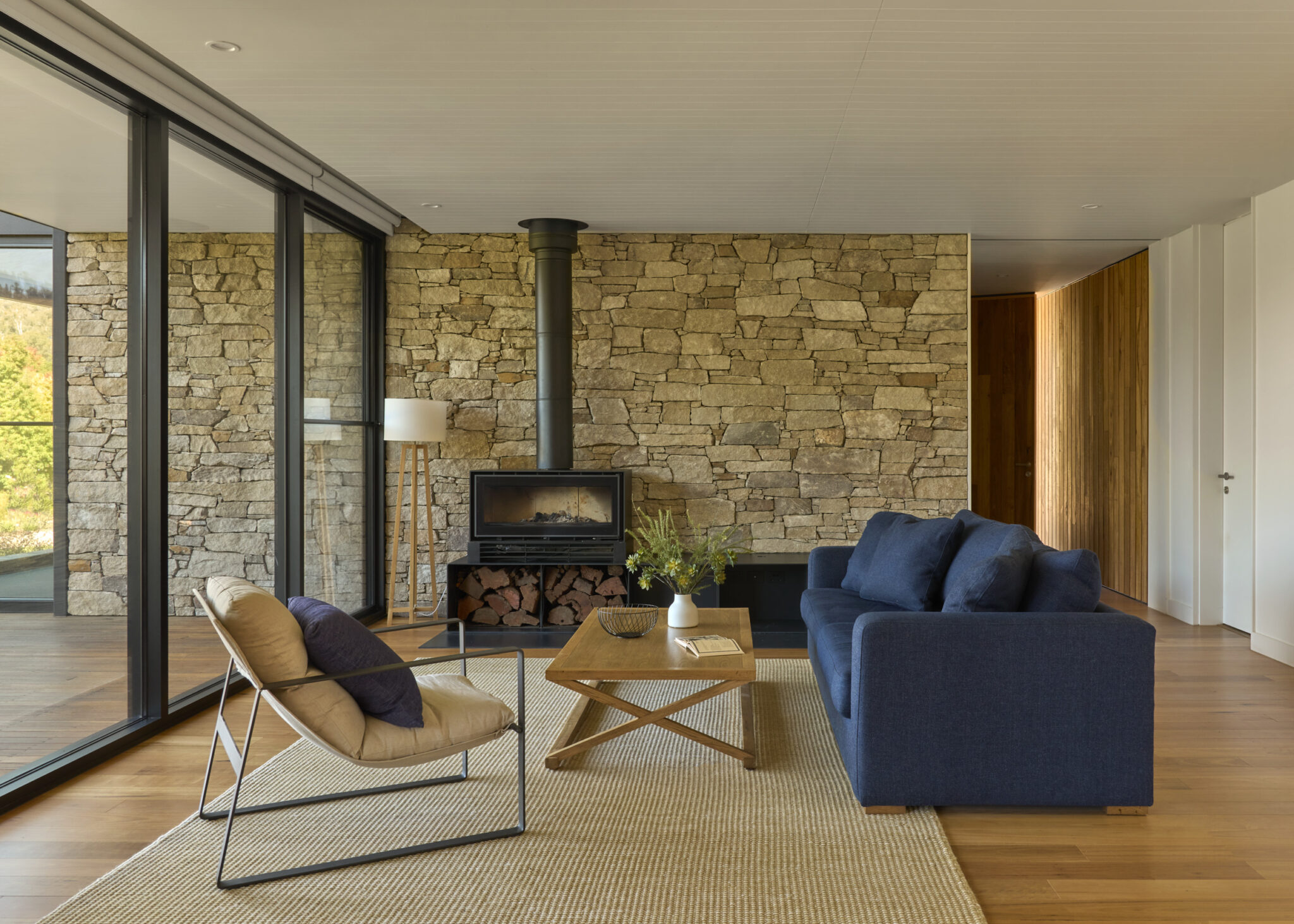
Blackbutt timber cladding was introduced to provide some warmth and texture. The stone cladding, which continues as a feature wall from the outside deck, into the living space, is a subtle nod to the distinguishing characteristic of the nearby ski field homes.
Our guiding principle was the palette needed to complement the surrounding landscape, thus allowing the architecture to feel grounded.
What does the Bright bespoke home project say about what modular design can achieve?
That modular design and construction allow you to create something genuinely site-specific, without limitations on materials. The orientation, the material palette, the relationship to the landscape – none of these were compromised by the method.
Credits
Photography by Jack Lovel